Life in Germany · Life & culture
Advent, Advent, ein Lichtlein brennt: Advent wreaths and Advent calendars in Germany
Four Sundays of waiting for Christmas
Around mid-November, round wreaths woven from fir branches start piling up at the entrances of supermarkets and flower shops. Next to the tills, flat cardboard boxes filled with chocolate line up too. In Germany, the four Sundays before Christmas are called Advent (der Advent, the time of waiting). This year 29 November is the first Sunday of Advent (der 1. Advent), followed by 6, 13 and 20 December. During these four weeks, families light candles on a wreath at home, and every morning children open one little door on their calendar.
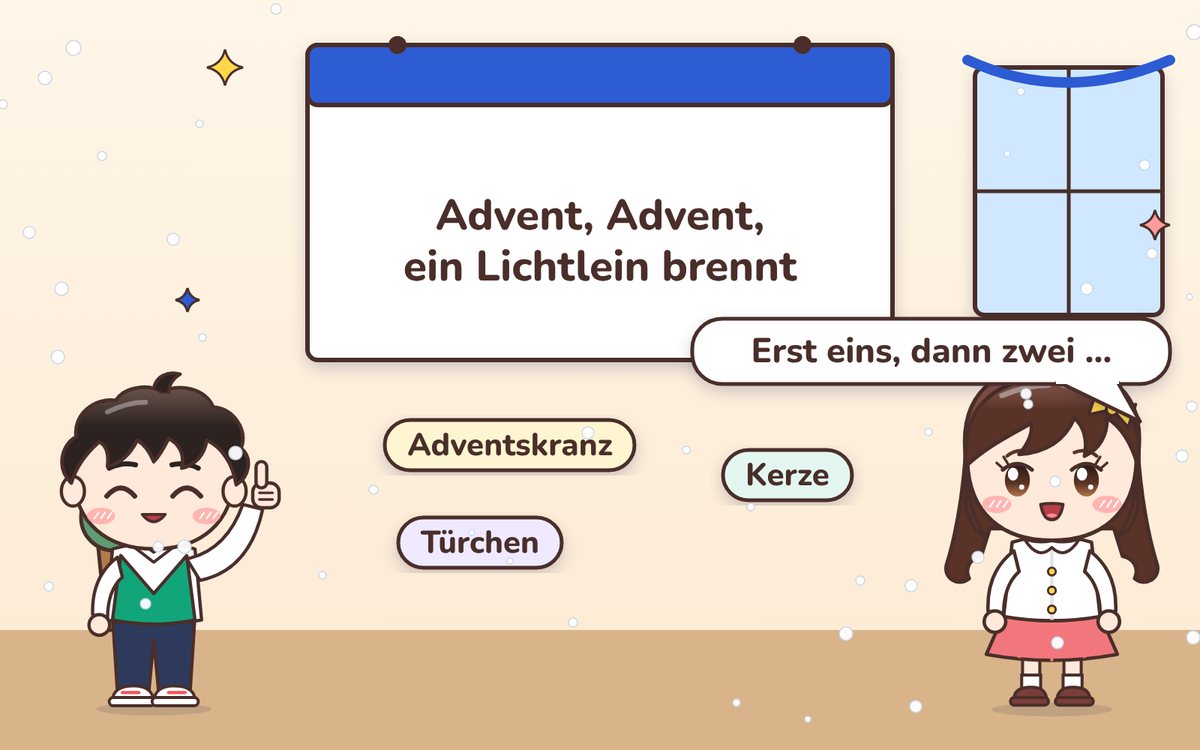
The Advent wreath: one more candle every Sunday
An Advent wreath (der Adventskranz) is a round wreath made of fir branches with four candles on it. On the first Sunday of Advent you light one candle, on the next Sunday two, and so on, one more each week, until all four are burning on the last Sunday. Children learn a short rhyme to go with it.
Advent, Advent, ein Lichtlein brennt. Erst eins, dann zwei, dann drei, dann vier, dann steht das Christkind vor der Tür. (Advent, Advent, a little light is burning. First one, then two, then three, then four, then the Christ Child is at the door.)
The custom is said to have started in 19th-century Hamburg. The Protestant theologian Johann Hinrich Wichern put candles on a cartwheel in a home where he looked after children, so they could count the days left until Christmas. Today many families put a wreath on the table, whether they're religious or not.
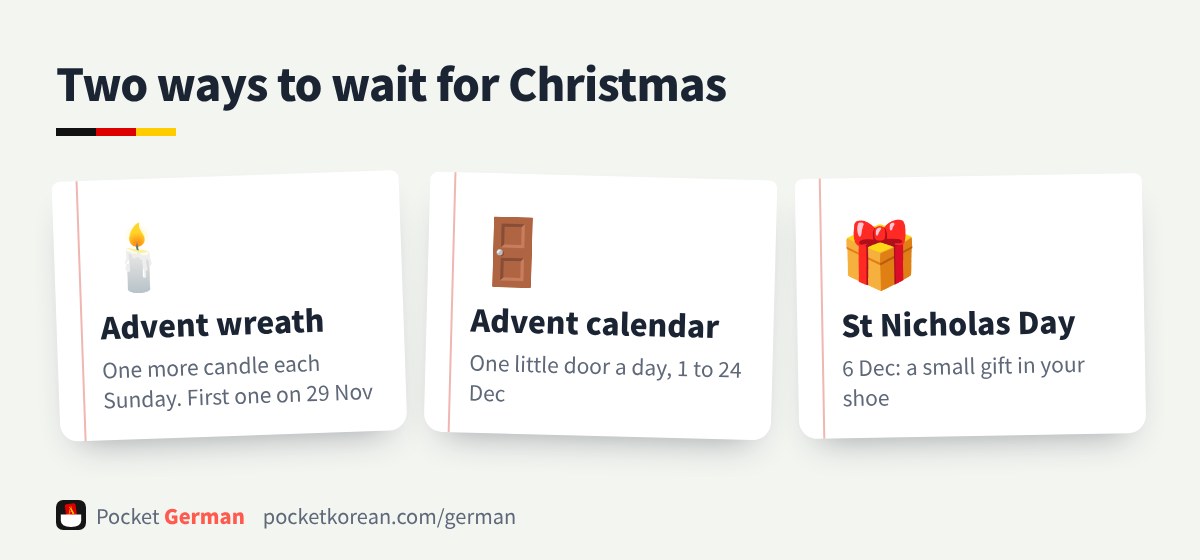
The Advent calendar: 24 little doors
An Advent calendar (der Adventskalender) is a calendar where you open one door a day from 1 to 24 December. The most common kind is a cardboard calendar with a small chocolate behind each door, but these days there are all sorts: calendars filled with tea, cosmetics, Lego or even beer. Many families make their own, too: they hang 24 little bags on a string and put a small present in each one.
In Germany, Advent calendars became widespread in the early 20th century, when printed ones came out. People usually buy their calendar and hang it up by 30 November. Popular calendars can sell out early, so it's less stressful to get yours in good time.
| When | What happens? |
|---|---|
| Mid to late November | Buy a wreath and a calendar (supermarket, flower shop, Christmas market) |
| 29 Nov (1. Advent) | Light the first candle on the wreath |
| 1 Dec | Open the first door of the Advent calendar |
| 6 Dec (2. Advent, St Nicholas' Day) | The second candle + small presents in children's shoes |
| 13 Dec · 20 Dec | The third and fourth candles |
| 24 Dec | The last door of the calendar, Christmas Eve |
Be careful with the candles
Dry fir branches burn more easily than you'd think. That's why fire brigades and insurers remind people every year at this time to take care with candles. Please stick to these:
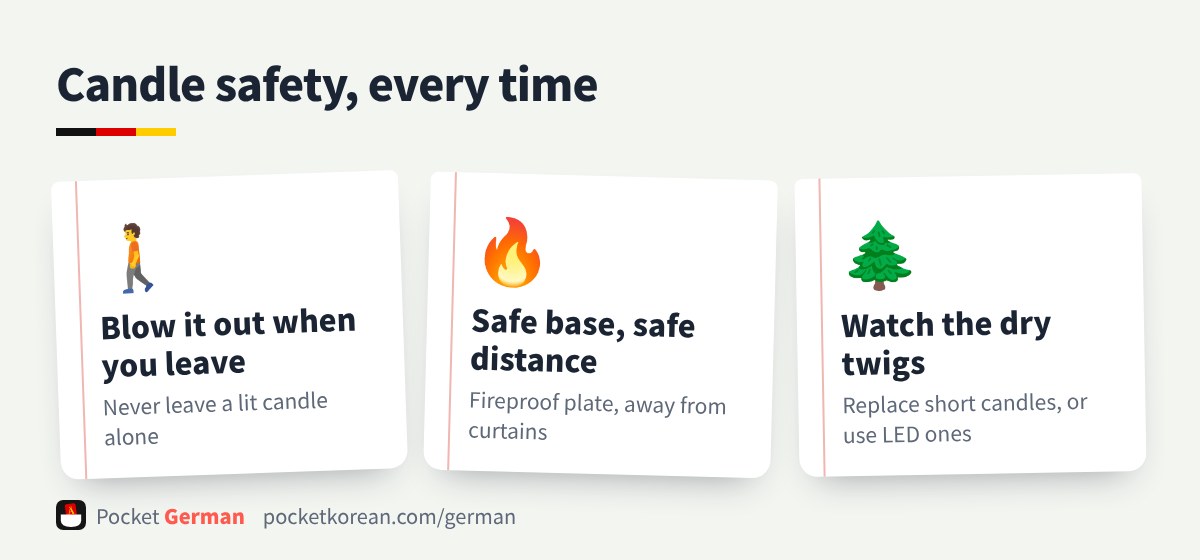
- Always blow out the candles when you leave the room (even for a moment)
- Keep the wreath away from curtains and paper decorations, on a fireproof base
- Put in new candles once they've burnt down close to the branches
- Very dry branches catch fire easily, so check how the wreath is doing around mid-December
- If you have children or pets, LED candles are a good choice too
Today's German words
| Word | Meaning |
|---|---|
| der Advent | Advent (the four weeks before Christmas) |
| der Adventskranz | Advent wreath |
| der Adventskalender | Advent calendar |
| die Kerze | candle |
| das Türchen | little door (on the calendar) |
| der Tannenzweig | fir branch |
This year, why not wait for Christmas the German way? Eine schöne Adventszeit! 🕯️