German lessons · German exam guides · A1–C2
The Goethe-Zertifikat (A1–C2)
The Goethe-Zertifikat is the family of German exams run by the Goethe-Institut. There is one exam for each CEFR level from A1 to C2, held and marked the same way worldwide. Anyone can take it — no German citizenship or minimum age is required, though each exam has a recommended age.
Levels and exams
| Level | Exam | Recommended age |
|---|---|---|
| A1 | Goethe-Zertifikat A1: Start Deutsch 1 | 16+ (teens: Fit in Deutsch 1, about 10+) |
| A2 | Goethe-Zertifikat A2 | 16+ (teens: Fit in Deutsch, about 12+) |
| B1 | Goethe-Zertifikat B1 | 16+ (youth version 12+) |
| B2 | Goethe-Zertifikat B2 | 16+ (youth version 15+) |
| C1 | Goethe-Zertifikat C1 | 16+ |
| C2 | Goethe-Zertifikat C2: Großes Deutsches Sprachdiplom | 18+ |
Modular from B1 up: at B1, B2, C1 and C2 each skill is a separate module. You can take modules alone or together and retake only the one you failed. A1 and A2 are taken as a whole.
The four parts and timing
Every exam tests Lesen (reading), Hören (listening), Schreiben (writing) and Sprechen (speaking). The written parts come first; speaking can be on another day.
| Level | Lesen | Hören | Schreiben | Sprechen |
|---|---|---|---|---|
| A1 | 25 min | ~20 min | 20 min | 15 min, group |
| A2 | ~30 min | ~30 min | ~30 min | 15 min |
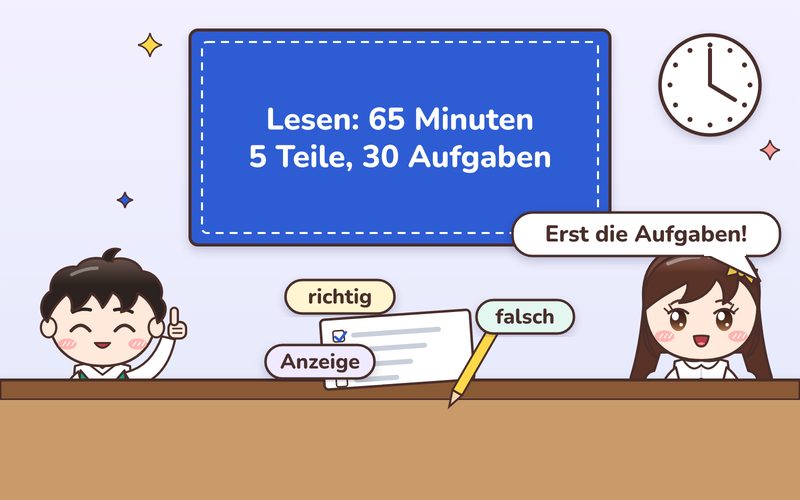
| B1 | 65 min | ~40 min | 60 min | ~15 min, pair (+15 min prep) |
| B2 | 65 min | ~40 min | 75 min | ~15 min, pair (+15 min prep) |
| C1 | 65 min | ~40 min | 75 min | ~20 min, pair (+20 min prep) |
| C2 | 80 min | ~35 min | 80 min | ~15 min, individual (+15 min prep) |
- A1: notes, ads and signs; announcements and phone messages; filling in a form and writing a short message; introducing yourself and asking simple questions in a group.
- B1: emails and newspaper articles; radio discussions; two emails and a forum post with your opinion; a conversation with a partner, then a short presentation.
- Pass mark: 60 out of 100 — for the whole exam at A1, for each module separately in the modular exams.
Which level for what?
- Spouse visa: usually A1 (Start Deutsch 1 is accepted); there are exceptions, so check with the German embassy.
- Settlement permit and naturalisation (Einbürgerung): B1.
- Vocational training (Ausbildung) visa: B2.
- University: many accept C1; C2 is accepted by every German-language university. Check your programme's requirements.
How to register
Register with a Goethe-Institut or an official Goethe exam centre (partner institution): on goethe.de, go to "Deutschprüfungen" → "Prüfungsorte weltweit" and pick your country. Dates and fees vary by test centre. Report special needs when you register. The exam is taken on site only.
How to prepare
- Do the free model test (Modellsatz) for your level on goethe.de, on paper or online.
- Watch the sample speaking video.
- For A1–B1, learn from the official word list (Wortliste).
- Practise with a timer — the written modules from B1 up are long.
Sources: Goethe-Institut: Deutschprüfungen · A1: Start Deutsch 1 · A2 · B1 · B2 · C1 · C2: Durchführungsbestimmungen (PDF) · Recognition for university study (PDF) · German Embassy Athens: German in the visa procedure (PDF)