German lessons · Everyday German phrases · A2
Mahlzeit! Small talk with colleagues in a German office
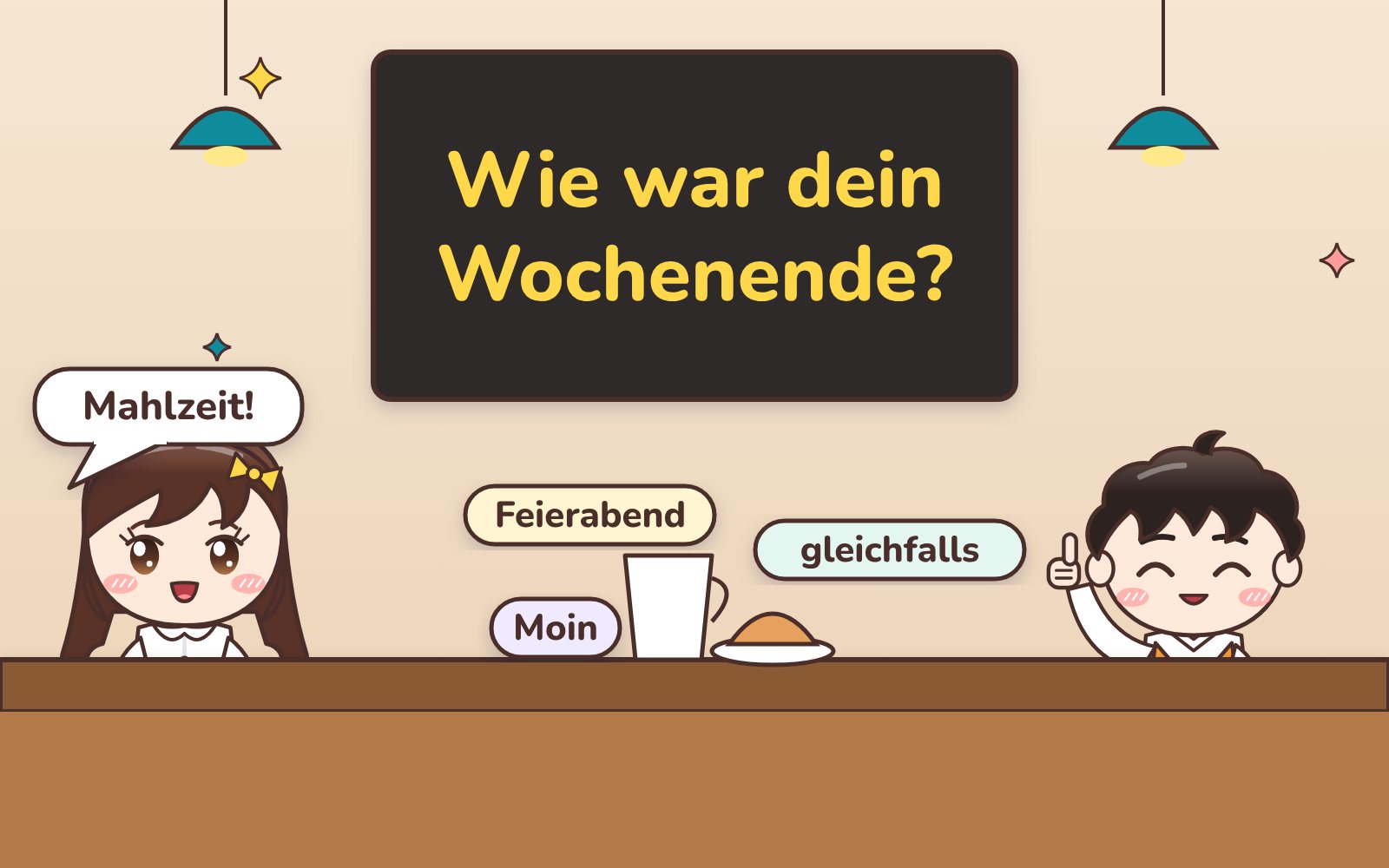
German workplaces can look all-business, but at the coffee machine and in the corridor there's plenty of quick chat. You don't need long conversations: a greeting, one question, a short answer is enough. These small exchanges add up and bring you closer to your colleagues. Some companies use du, others Sie, so both are given below.
Morning greetings
- Guten Morgen! — Good morning! Say it to everyone as you come in. In northern Germany people say Moin! all day long.
- Na, alles gut? — Hey, all good? A very light check-in. Answer Ja, alles gut. Und bei dir? (Yes, all good. And you?)
- Wie läuft's? — How's it going? Between colleagues who know each other well. Keep it short: Läuft! (Going well!) or Viel zu tun gerade. (Lots to do at the moment.)
Weekends and holidays
- Wie war dein Wochenende? / Wie war Ihr Wochenende? — How was your weekend? The classic Monday question. People expect a real, but short, answer.
- Schön, danke! Ich war mit Freunden wandern. — Nice, thanks! I went hiking with friends. One or two sentences are enough. Ruhig, ich habe mich ausgeruht. (Quiet, I had a rest.) works too.
- Hast du am Wochenende was vor? — Any plans for the weekend? Asked on Thursdays and Fridays. Nichts Besonderes. (Nothing special.) is a fine answer.
- Wie war dein Urlaub? — How was your holiday? Always ask this when a colleague is back from holiday.
Lunch and coffee
- Mahlzeit! — (lunchtime greeting) Enjoy your lunch! Said around lunchtime when you pass people in the corridor or canteen. The answer is simply Mahlzeit! How common it is depends a lot on the region and the company.
- Kommst du mit in die Kantine? — Are you coming to the canteen?
- Ich hole mir einen Kaffee. Willst du auch einen? — I'm getting a coffee. Want one too?
Leaving for the day or the weekend
- Schönen Feierabend! — Enjoy your evening! Feierabend is the time after work. Answer Danke, dir auch! / Danke, Ihnen auch!
- Schönes Wochenende! — Have a nice weekend! The Friday afternoon line. Answer Danke, gleichfalls! (Thanks, you too!)
- Bis morgen! / Bis Montag! — See you tomorrow! / See you Monday!
Short dialogue
Monday morning at the office coffee machine
A: Morgen, Lena! Wie war dein Wochenende? — Morning, Lena! How was your weekend?
B: Super, danke! Ich war in Leipzig bei meiner Schwester. Und deins? — Great, thanks! I visited my sister in Leipzig. And yours?
A: Eher ruhig. Ich habe viel gelesen. — Pretty quiet. I read a lot.
B: Klingt gut. Möchtest du auch einen Kaffee? — Sounds good. Would you like a coffee too?
A: Gern, danke! — Yes please, thanks!
B: Bitte schön. Na dann, auf in die neue Woche! — Here you go. Well then, on to the new week!
Watch out
- Wie geht's? — closer to a real question than English How are you? At work, though, a short Danke, gut! is the norm.
- Topics to avoid — salary, politics, religion and age aren't usually discussed with colleagues you don't know well. Weather, weekends, holidays and food are always safe.
- Mahlzeit! — only at lunchtime; at dinner it sounds odd. Not every workplace uses it, so listen first to whether your colleagues do.
Quick check
- At lunchtime a colleague says "Mahlzeit!". What do you answer?
Answer
Mahlzeit! — just say it back.- On Friday afternoon a colleague says "Schönes Wochenende!". Say "you too!".
Answer
Danke, gleichfalls! (or Danke, dir auch! / Danke, Ihnen auch!)- Ask a colleague you call Sie: "How was your weekend?"